


Thyme
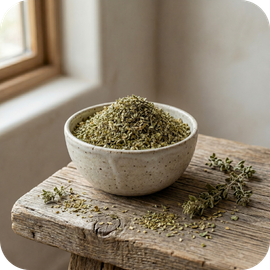
Thyme is one of the most characteristic aromatic plants, especially of Mediterranean cuisine. Just as it creates an "intense and appetizing scent" in meat dishes, sauces, or baked dishes at home, it similarly provides a powerful depth of aroma in our product.
The main reason we use thyme is to elevate the naturally rich and earthy structure of the legume-based product into a more aromatic, more distinct, and more appetizing profile.
Thyme has a stronger and "warmer" aroma character compared to basil. Therefore, it creates a deeper layer of flavor that complements the fresh top notes of basil.
From a technological standpoint, thyme acts as a "mid-to-base note" in the spice blend. In other words, it provides a lasting aroma effect that is not dominant at first, but emerges during and after chewing. Thanks to this, the flavor of the product becomes layered rather than one-dimensional.
Thyme naturally contains volatile aromatic compounds such as thymol and carvacrol. These components give the plant its characteristic sharp, slightly woody, and aromatic scent. Thanks to this structure, thyme is widely used in food products as both a flavor enhancer and an aroma balancer.
We do not see the use of thyme merely as "adding a spice"; we view it as transforming the dense structure of the legume-based product into a more familiar, appetizing experience close to Mediterranean cuisine.
Scientific Note
Thyme exhibits strong antimicrobial and aromatic properties thanks to its essential oils, which primarily contain thymol and carvacrol. Even in low amounts, these components create a distinct aroma effect in foods and are widely used, particularly in Mediterranean-style foods.
References
1- Bakkali, F. et al. (2008). Biological effects of essential oils – a review. Food and Chemical Toxicology.
2- Burt, S. (2004). Essential oils: their antibacterial properties and potential applications in foods.
3- Skoula, M., & Harborne, J.B. (2002). The taxonomy and chemistry of Origanum.