


Basil
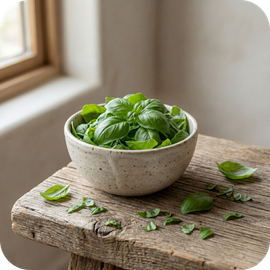
Basil is an aromatic and refreshing plant widely used especially in Mediterranean and Italian culinary culture. Just as it provides a “fresh and vibrant aroma” in many recipes from tomato sauces to pasta dishes, it plays a similar role in our product.
The main reason we use basil is to make the strong and intense flavor profile of the legume-based formulation more balanced, fresher, and more layered. Compared to the dense structure of legumes, basil adds light herbal and aromatic notes, elevating the overall taste.
From a technological perspective, basil acts like a “top note” in a spice blend. In other words, it provides the first perceived aromatic freshness, after which the deeper flavors of legumes and spices emerge. This creates a more “lively” and “food-like” sensory profile for the consumer experience.
Basil also naturally contains volatile aromatic compounds (especially eugenol and linalool). These compounds are responsible for the characteristic aroma of the plant. Even in dried form, this aromatic structure is partially preserved, giving the product a distinctive herbal freshness.
The aromatic character of basil mainly comes from volatile compounds such as linalool, eugenol, and methyl chavicol. These compounds can create a noticeable aroma effect even at low concentrations in food products. For this reason, basil is widely used worldwide as an aromatic balancing ingredient in sauces, snacks, and ready-to-eat foods.
We use basil not only to “add aroma,” but also to balance the intensity of the legume-based product, enhance flavor layers, and provide a fresher consumption experience.
Average nutritional values per 100 g of basil:
Energy
~230 -240 kcal
Protein
~21–23 g
Carbohydrate
~46–48 g
Dietary Fiber
~36–38 g
Fat
~4–5 g
*Values may vary depending on the variety, growing conditions, and processing (grinding) method.