


Rice Flour
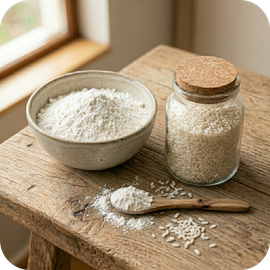
Rice flour is one of the most widely used cereal ingredients to achieve the ideal texture in baked extruded snacks. The reason it is preferred in tempura batters or crispy coatings at home is its unique ability to create a light and crunchy texture. For this very reason, we include rice flour in our formulation.
Although pulses are rich in protein and fiber, when used entirely on their own, it can be challenging for the product to expand sufficiently and achieve the desired crunchiness. Thanks to its natural starch content, rice flour helps the product expand perfectly during extrusion. The dough, processed under high temperature and pressure inside the extruder, expands with a sudden drop in pressure as it exits the mold, creating the snack's light, porous, and crunchy structure. Rice flour is one of the most critical components of this process.
In terms of flavor, it has a neutral profile. This allows it to improve the product's texture without overpowering the natural flavors coming from the pulses.
In short, we do not use rice flour to boost nutritional value; rather, we use it to ensure the product expands correctly during extrusion, gains a light and crunchy texture, and delivers an enjoyable snacking experience.
On average, 100 g of rice flour contains::
Energy
~365 kcal
Protein
~6–8 g
Carbohydrates
~78–82 g
Dietary Fiber
~2–3 g
Fat
~0,5–1 g
*Values may vary depending on variety, growing conditions, and milling method.
References
1- Ding, Q.B., Ainsworth, P., Tucker, G., & Marson, H. (2005). The effect of extrusion conditions on the physicochemical properties and sensory characteristics of rice-based expanded snacks. Journal of Food Engineering, 66, 283–289.
2- Guy, R. (2001). Extrusion Cooking: Technologies and Applications. Woodhead Publishing.
3- Singh, B., Sekhon, K.S., & Singh, N. (2007). Effects of moisture, temperature and level of pea grits on extrusion behaviour and product characteristics of rice. Food Chemistry, 100, 198–202.